





Offshore Wind Installation Logistics for Deep Water Depths
Project Information
Company Name: University of Bristol in collaboration with Wood Thilsted and Neretek
Project Type: Academic Collaboration / Installation and O&M Logistics Modelling
Products Used: ForeCoast® Marine


Background
How do you prove a new deepwater foundation can be built and maintained efficiently before anyone commits capital? A University of Bristol MSc dissertation, run with Wood Thilsted, used Kinewell’s ForeCoast® Marine software to model the offshore wind installation logistics and O&M strategy for the Neretek BC90™, a foundation designed for water depths of 60 to 90 metres.
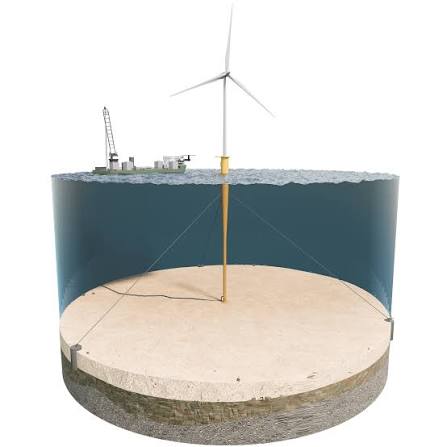
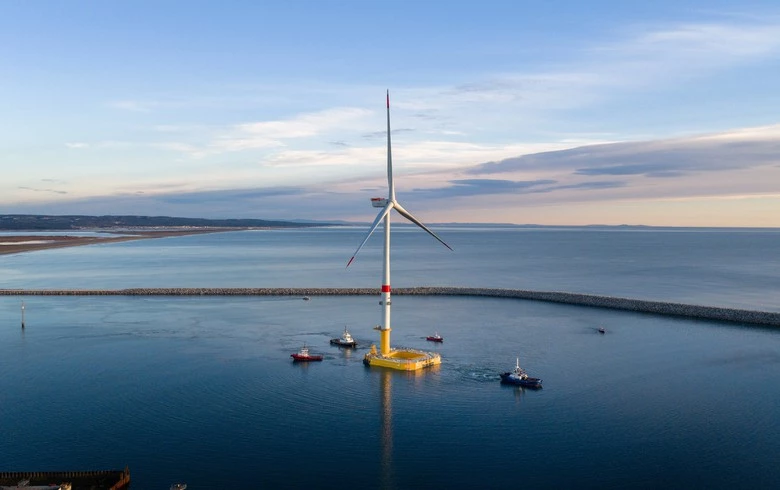
Wood Thilsted is a leading offshore wind foundation design consultancy, with projects including Dogger Bank, Vineyard Wind, and Thor. Wood Thilsted and COP Frontier founded Neretek to unlock the potential of deepwater offshore wind, with the BC90™ as its flagship foundation. The BC90™ is designed to bring the simplicity and scalability of monopiles to water depths of 60 to 90 metres. By bridging the gap between traditional fixed-bottom foundations and floating wind technologies, it could unlock more seabed, access stronger wind resources, and accelerate deployment at lower cost and risk.
Challenge
A novel concept needs more than good engineering logic behind it. It needs proof that it can be installed and maintained efficiently on site. Innovation in deeper water cannot rely on design promise alone, and must be tested against real installation conditions before it earns industry confidence. The project needed a way to turn a complex offshore wind planning problem into something well-defined and manageable, even within the scope of an MSc project.
Solution
ForeCoast® Marine was used to plan and evaluate the installation and O&M logistics for the BC90™ at a hypothetical site in Scotland. The software simulates how a project’s construction or O&M campaign would have played out using historical or user-uploaded forecast metocean data, allowing users to quickly compare strategies, manage weather windows, identify bottlenecks, and evaluate risk before committing to a delivery plan.
Through this project, ForeCoast® Marine was used to:
-
Model a range of vessel combinations for the installation campaign
-
Test different installation processes and sequencing
-
Apply varying maximum wave height working limits
-
Compare installation durations and costs across design options
The software’s ability to easily ingest key operational data and generate clear charts made this possible within the scope of a Master’s dissertation.
Conclusion
By simulating vessel strategies and weather limits against historical metocean data, ForeCoast® Marine delivered cost and duration evidence that stands up before capital or industry buy-in is committed. The project played a role in advancing the BC90™ concept, building on nearly a decade of development by Wood Thilsted, and reflects a wider pattern of academic collaboration that underpins much of Kinewell’s product development.
Paul Harper, Project Supervisor and Lecturer in Engineering Design at the University of Bristol, said:
“We would like to thank Kinewell for providing such a valuable resource to support the project, which was extremely quick and intuitive to learn. ForeCoast® Marine was key to ensuring the project’s core aims were met, and we received extensive help from the Kinewell support team whenever the students had queries on using the software and interpreting the results.”
Whether you’re de-risking a new foundation concept or optimising a live construction campaign, ForeCoast® Marine helps you test strategies against real weather before you commit.
Request a demo to see it in action.